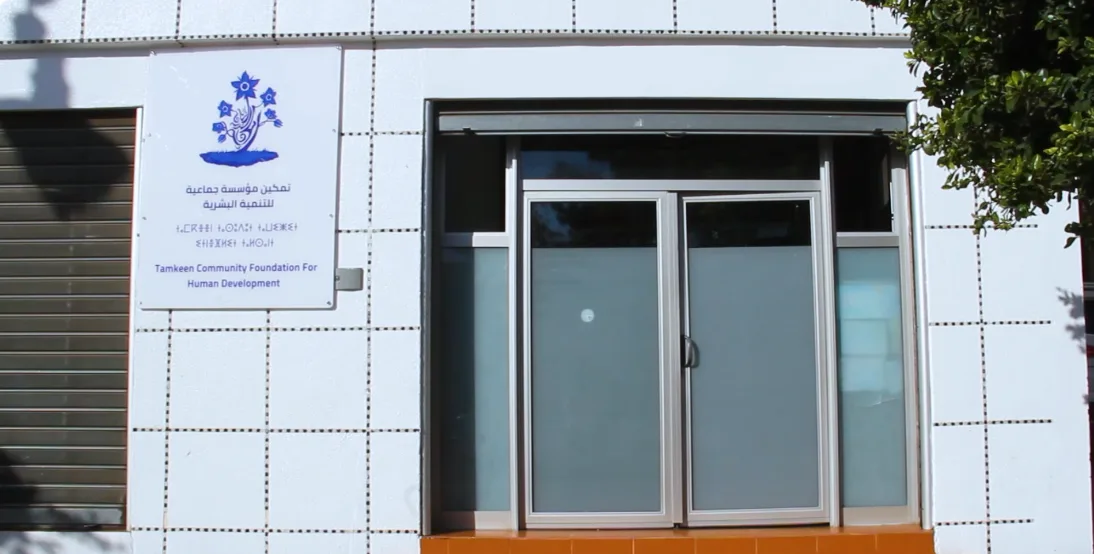
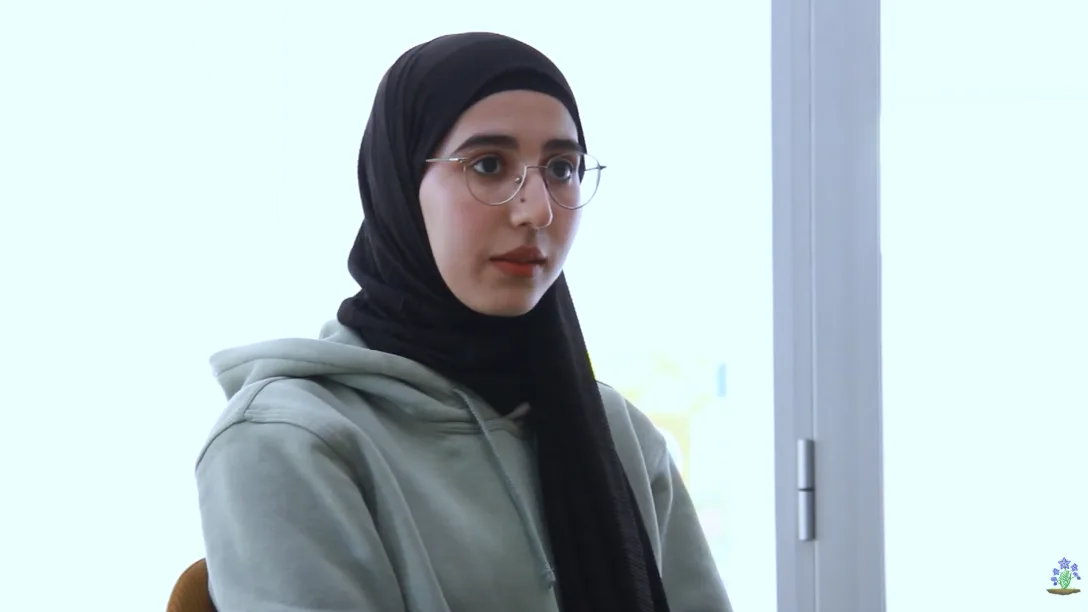
Salaam and greetings from Tangier, Morocco. My name is Karima Kadawi. I am the co-founder and executive president of Tamkeen Community Foundation for Human Development. I am really delighted to be part of this celebration of the Learning Planets Festival. I'm here to tell you about the story of Temkin, the story of a process, which is a process of inquiry, learning and understanding. That has been co-created with our partners within an embedded Our partners are the education system, neighbourhoods, schools, universities, also research and corporate communities. We co-create together the conditions for the emergent process that we call Temkin. It's a co-creation of a safe place where we can express and we can learn to express our human potential. That human potential is the humanity that defines us and connects us. And when we learn together to co-create the conditions for its expression, it transcends us. And it transcends us into our creative eminence.
And this is what we are witnessing and experiencing throughout these last 10 years with the 10 King process.
We met initially a neighborhood in the outskirts of Tangier. We met them to get to know them, not because we were lacking something, but because of the potential that was in that community, the potential that was on us, and the potential that could emerge from our relationship. We have seen a process of transformation, a deeply humbling process of transformation. One of the young men last year told us, "Really, nothing has changed. The streets are the same, the people are the same, the houses are the same." Everything is the same, yet everything is different. Our relationships have changed. We used to get together for violence. Today we get together for love. It is quite surprising to hear a young boy, a 12-year-old young boy, saying "Temkin does nothing and Temkin does everything. Temkin teaches us to rely on ourselves." And yet that was said in 2012 and six years later in the education system we hear top management of regional education system governance body saying "Temkin is giving us the key to find our own solutions."
The challenges of this process are to learn together, to give time to time. And by doing that, we actually realize that we gained time. The challenges are also to understand that it's not a process to scale, but it's a process that diffuses. It diffuses because it is embodied, because it is part of the experience, and that experience is shared and co-reflected and becomes self-aware. And in that self-awareness grows a whole system awareness. That process is what gives life to a diffusion process that is multi-scale, that goes throughout society. The challenge also is to, when we look at the thorn to be able to see the rose, that means to nourish our patience, in a way with the beauty of the experience of this deep connection, of this deep human connection. Also to be able to see the whole from the parts and the parts from the whole. Our challenge is to grow the courage, the courage to trust in our human potential. And to dissolve the fears with our unconditional love.
Finally, the challenge of this process is to learn not to be in the way of the process because what we are experiencing is societal metamorphic transformation. We have seen how the Temkin process has moved from neighborhood to education system, from local to systemic. We have seen how the Temkin process has grown from community learning to community-based learning ecosystem. We have also seen how from community development, we are together learning to co-create the conditions for the emergence of the ecosystem of a humanizing society.
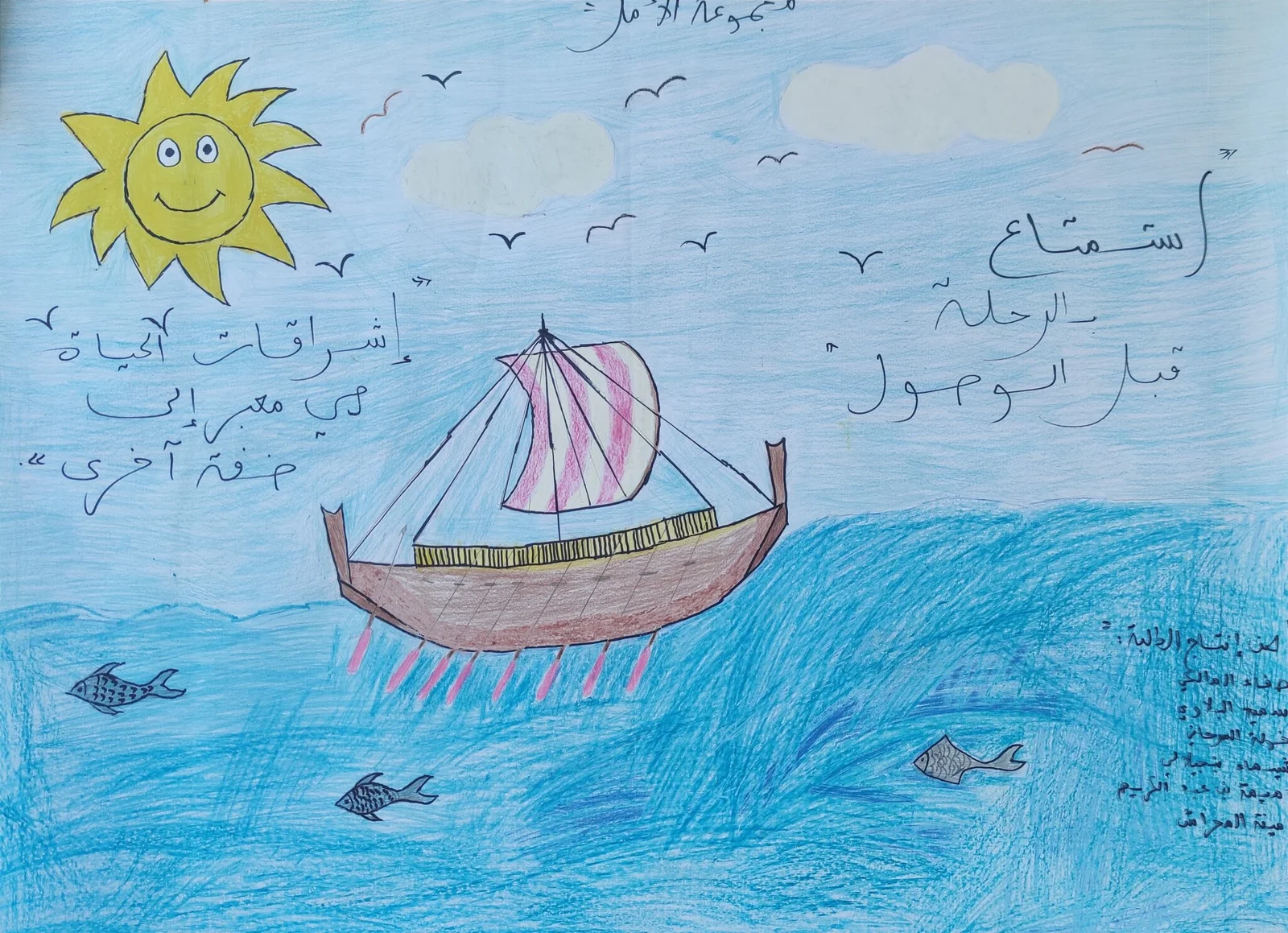
I'd like to share with you the picture of this maquette that the students of two high schools in Tangier have made together. They're talking about the beauty of the Temkin experience and how that morphed their sense of self and how their school went from the dark to the light. I am deeply grateful to be able to share with you the story of the Temkin process, the Temkin approach today. And I thank you very much for the opportunity.